
The appearance of the neck is determined by much more than loose skin or excess fat. The platysma muscle, its attachments to deeper neck structures, the position of the submental tissues, and the relationship between the neck and jawline all contribute to the contour of the lower face and neck.
Dr. Stong did an amazing job. I had an eyebrow lift, eyelids, face and neck lift. It’s only been 3.5 weeks and I am thrilled with the new me already! He is highly qualified and I recommend him without hesitation. He and his office staff are professional, available and eager to make your experience a positive one.

For patients requiring more comprehensive correction, double board-certified facial plastic surgeon Benjamin C. Stong, MD, performs an advanced Deep Neck Lift designed to release, elevate, and structurally reposition the platysma rather than relying primarily on skin tightening or limited muscle repair.
Dr. Stong’s Deep Neck Lift incorporates three important components of advanced neck rejuvenation:
- Complete release and elevation of the platysma from the deeper neck structures
- Extended central and lateral platysma myotomies
- Double platysmaplasties performed centrally and laterally to create vertical lift and cantilever torque
Together, these techniques allow Dr. Stong to create greater elevation of the neck, sharpen the cervicomental angle where the chin meets the neck, elevate the submental soft tissues, and improve definition along the jawline and mandibular angle.
Importantly, Dr. Stong developed this approach to achieve comprehensive deep neck rejuvenation without routinely excising the submandibular glands, removing the digastric muscles, or manipulating other deeper neck structures.
When facial aging is also present, Dr. Stong can combine his Deep Neck Lift with the KalosLift Advanced Deep Plane Facelift, allowing the released platysma of the neck and deeper tissues of the cheek to be elevated together as part of a comprehensive structural rejuvenation of the face, jawline, and neck.
What Is a Deep Neck Lift?
A Deep Neck Lift is an advanced surgical approach to improving an aging, heavy, or poorly defined neck by addressing the anatomical structures responsible for its contour.
Traditional neck lift procedures may focus primarily on removing excess skin, reducing submental fat, or tightening separated edges of the platysma muscle in the center of the neck. These procedures can be appropriate for some patients, but they do not necessarily provide the degree of structural release and repositioning required for more comprehensive neck rejuvenation.
Dr. Stong’s approach begins with a fundamental surgical principle:
For the platysma to be significantly elevated, it must first be adequately released.
The platysma is a broad, thin muscle extending across the neck and into the lower face. Attachments between the platysma and deeper neck structures can restrict how far and in which direction the muscle can be repositioned.
Dr. Stong completely releases and elevates the platysma from these deeper attachments. Extended myotomies further release restrictive portions of the muscle centrally and laterally. He then performs both central and lateral platysmaplasties to restore structural support and elevate the released platysma in a more vertical direction.
Rather than simply tightening the neck, the objective is to release, reposition, support, and elevate the muscular layer responsible for much of the neck’s shape.
Dr. Stong’s Advanced Deep Neck Lift Technique
No two necks age identically, and Dr. Stong customizes every procedure to the patient’s individual anatomy. His advanced Deep Neck Lift, however, is distinguished by three fundamental surgical concepts.
1. Complete Platysma Release and Elevation
A limitation of less extensive neck lift techniques is that the platysma can remain tethered to underlying structures.
Dr. Stong performs a complete release and elevation of the platysma from deeper neck structures, allowing the muscle to move more freely and providing greater potential for lift.
This becomes particularly important when a Deep Neck Lift is performed with the KalosLift Advanced Deep Plane Facelift. Once sufficiently released, the platysma can be elevated as a muscle flap together with the tissues of the cheek, creating coordinated repositioning across the lower face, jawline, and neck.
This reflects a principle that is central to Dr. Stong’s approach to advanced deep plane facial surgery:
Release before repositioning.
Instead of attempting to create greater correction by placing more tension on tissue that remains tethered, Dr. Stong releases the restrictive attachments so the tissue itself can be more effectively repositioned.
2. Extended Central and Lateral Platysma Myotomies
A myotomy is a controlled surgical release of muscle fibers.
Dr. Stong performs extended platysma myotomies both centrally and laterally as part of his Deep Neck Lift.
These releases are important because simply suturing the platysma together does not necessarily provide sufficient mobility for the degree or direction of elevation Dr. Stong wants to achieve.
Centrally, Dr. Stong combines an extended myotomy with a midline corset platysmaplasty. This inferior release reduces restriction within the platysma and allows the lateral lifting component of the procedure to exert a greater effect.
Laterally, another extended myotomy creates additional mobility so the platysma can be elevated in a more vertical direction.
This combination allows Dr. Stong to control not simply how much the platysma is elevated, but also the vector in which it is repositioned.
3. Double Platysmaplasty: Central and Lateral Structural Support
A platysmaplasty repairs and repositions the platysma muscle.
Many neck lift techniques incorporate a central or midline platysmaplasty, sometimes referred to as a corset platysmaplasty, to bring separated portions of the muscle together.
Dr. Stong goes further by performing double platysmaplasties, centrally and laterally.
The central corset platysmaplasty restores the platysma as a more unified support structure across the neck.
The lateral platysmaplasty serves a different purpose. After performing the extended lateral release, Dr. Stong elevates the platysma vertically to generate additional lifting force along the neck and jawline.
The interaction between these central and lateral repairs allows the platysma to function as a structural support system rather than simply treating visible bands in the center of the neck.
Cantilever Torque and the Cervicomental Angle
One of the most important distinguishing features of Dr. Stong’s Deep Neck Lift is the use of cantilever torque to improve the cervicomental angle.
The cervicomental angle is the angle formed where the underside of the chin transitions into the neck. A crisp, well-defined cervicomental angle is an important feature of a youthful neck and attractive profile.
With aging, this angle can become blunted by skin laxity, descent and separation of the platysma, submental fullness, and changes in the position of the soft tissues beneath the chin.
Dr. Stong’s extended myotomies and double platysmaplasty are specifically designed to concentrate lifting force at this critical area.
Following the necessary releases, the lateral platysma is elevated vertically. This creates cantilever torque at the cervicomental angle, helping elevate the submental soft tissues and floor of the mouth while improving the position and support of the tissues beneath the jawline.
The technique is designed to improve definition at several interconnected anatomical landmarks:
- The cervicomental angle beneath the chin
- The submental region
- The mandibular border and jawline
- The gonial angle at the back of the jaw
The objective is a cleaner transition from the chin into the neck and a sharper distinction between the neck and jawline without creating an excessively tight or operated appearance.


Deep Neck Lift Without Routine Submandibular Gland Excision
Some approaches to deep neck surgery involve operating directly on structures beneath the platysma, potentially including reduction or excision of portions of the submandibular glands or alteration of the digastric muscles.
Dr. Stong takes a different approach.
His Deep Neck Lift is specifically designed to create significant structural improvement through extensive release and repositioning of the platysma rather than routinely removing or surgically altering these deeper structures.
The combination of complete platysma release, extended central and lateral myotomies, and double platysmaplasty allows Dr. Stong to elevate the floor of the mouth and submandibular gland region through repositioning and support of the overlying platysma.
As a result, Dr. Stong does not routinely need to excise the submandibular glands, remove the digastric muscles, or manipulate these deeper structures to achieve his intended neck and jawline contour.
When excess volume beneath the chin contributes to fullness, Dr. Stong directly excises the submental fat pad when appropriate.
His objective is not to remove as much tissue as possible. It is to identify the anatomical structures creating the patient’s neck contour and correct them through a carefully planned structural approach.
Deep Neck Lift vs. Traditional Neck Lift
“Neck lift” is a broad term encompassing several surgical techniques, and the appropriate procedure depends upon the anatomy being treated.
A more limited neck lift may include skin removal, liposuction, or a central platysmaplasty. For the right patient, these techniques can produce moderate improvement.
A Deep Neck Lift is intended for patients desiring more extensive structural correction.
Dr. Stong’s advanced approach differs from a conventional neck lift in several important ways:
- More complete release: The platysma is extensively released from deeper neck attachments rather than remaining partially tethered.
- Central and lateral myotomies: Extended muscle releases increase mobility and permit more comprehensive repositioning.
- Double platysmaplasty: Both central and lateral platysma repairs are used rather than relying exclusively on a midline repair.
- Vertical elevation: The released lateral platysma is lifted vertically to improve neck and jawline definition.
- Cantilever torque: The surgical design concentrates lifting force around the cervicomental angle and submental structures.
- Preservation of deeper structures: Dr. Stong’s technique is designed to achieve deep neck correction without routinely excising the submandibular glands or removing the digastric muscles.
For Dr. Stong, the distinction is therefore not simply how much skin is removed. It is how extensively the platysma is released and how it is structurally repositioned.


The Relationship Between the Platysma, Jawline, and Neck
The neck and lower face are anatomically interconnected.
The platysma extends from the neck into the lower face, which is one reason Dr. Stong evaluates the neck and face together rather than viewing them as completely separate aesthetic regions.
Aging of this interconnected system can contribute to:
- Vertical platysmal bands
- Loose or hanging neck skin
- Submental fullness
- Loss of a defined cervicomental angle
- Jowling
- Reduced mandibular definition
- Blunting of the gonial angle
- Poor distinction between the face and neck
Correcting one feature without considering the others can produce an incomplete result.
Dr. Stong therefore evaluates the entire structural relationship between the chin, jawline, lower face, and neck before recommending surgery.
Combining a Deep Neck Lift with the KalosLift Advanced Deep Plane Facelift
For patients experiencing aging in both the face and neck, Dr. Stong can incorporate advanced neck rejuvenation into his KalosLift Advanced Deep Plane Facelift.
This combination is particularly important because the SMAS of the face and platysma of the neck are part of an interconnected anatomical system.
During the KalosLift, Dr. Stong performs extensive release of the deeper facial tissues to permit more effective repositioning of the cheek and lower face. In the neck, complete platysma release and extended myotomies similarly create the mobility necessary for greater elevation.
The released platysma can then be elevated as a muscle flap together with the cheek, allowing the face, jawline, and neck to be rejuvenated as related structures rather than as isolated areas.
This helps create a continuous, natural transition from the cheek through the jawline and into the neck.
Deep Neck Lift and Submental Fat Removal
Not every poorly defined neck is caused by the same anatomical problem.
For some patients, excess submental fat beneath the chin contributes significantly to a heavy neck or double chin. Younger patients with good skin elasticity and muscle support may sometimes be candidates for neck liposuction or another more limited contouring procedure.
During an advanced Deep Neck Lift, however, Dr. Stong directly excises the submental fat pad.
Direct fat removal allows him to address excess volume while simultaneously correcting the muscular and structural components contributing to poor neck definition.
The goal is not over aggressive fat removal. Removing too much volume can produce an unnatural or overly skeletonized appearance. Instead, submental fat reduction is customized to the patient’s anatomy and incorporated into the broader structural plan for the neck.
Who Is a Candidate for a Deep Neck Lift?
Candidates for a Deep Neck Lift may be bothered by one or several changes involving the neck and jawline, including:
- Loose or sagging neck skin
- Visible platysmal bands
- A poorly defined or blunted cervicomental angle
- Fullness beneath the chin
- Loss of jawline definition
- Jowling associated with lower facial aging
- Reduced definition at the mandibular or gonial angle
- A neck that appears heavy despite a healthy body weight
- Recurrent or residual neck laxity following previous facial surgery
Age alone does not determine whether someone requires a Deep Neck Lift.
Dr. Stong evaluates the skin, superficial and submental fat, platysma, jawline, lower facial tissues, and underlying facial proportions to determine which procedure or combination of procedures is most appropriate.
Some patients may be candidates for isolated neck surgery. Others achieve a more comprehensive result when the Deep Neck Lift is combined with the KalosLift Advanced Deep Plane Facelift.

Recovery After Deep Neck Lift Surgery
Recovery is an important part of Dr. Stong’s approach to advanced facial and neck surgery.
Because a Deep Neck Lift involves extensive release and structural repositioning of the platysma, patients should expect swelling, tightness, and some bruising during the early postoperative period. The amount and duration vary according to the extent of surgery, the patient’s individual healing response, and whether the Deep Neck Lift is performed independently or combined with a KalosLift or other facial procedures.
Most patients should anticipate approximately 10 to 14 days of initial social downtime, although healing continues well beyond this early period.
During the following weeks:
- Bruising progressively resolves
- Swelling continues to decrease
- The tissues begin to soften
- Incisions continue to heal and mature
- Neck and jawline definition becomes progressively more apparent
Although results are impressive and visible when the dressings are removed, the final contour is not expected for some time after surgery. As postoperative swelling resolves and the repositioned tissues settle, the neck typically becomes increasingly refined over the following weeks and months.
Medical-Grade Hyperbaric Oxygen Therapy
Dr. Stong also incorporates an advanced postoperative recovery protocol that includes medical-grade hyperbaric oxygen therapy, or HBOT, following facial and neck rejuvenation surgery.
During hyperbaric oxygen therapy, a patient breathes oxygen in a medically supervised pressurized environment. The treatment increases the amount of oxygen available to tissues and is used by Dr. Stong as part of an overall strategy intended to support postoperative healing and recovery.
This is an area in which Dr. Stong has more than clinical experience.
Dr. Stong and Dr. Andrew Jacono co-authored the peer-reviewed study, “Effect of Perioperative Hyperbaric Oxygen on Bruising in Facelifts,” published in the Archives of Facial Plastic Surgery.
That research examined the use of perioperative hyperbaric oxygen therapy following facelift surgery and reflects Dr. Stong’s longstanding interest in reducing postoperative bruising and improving the recovery experience.
At Kalos Facial Plastic Surgery, medical-grade HBOT is often incorporated into the postoperative protocol to increase tissue oxygenation and support tissue repair while helping patients through the early inflammatory, swelling, and bruising phases of recovery.
Hyperbaric oxygen therapy is one component of a broader recovery program rather than a substitute for meticulous surgery or appropriate postoperative care.
Patients also receive individualized instructions concerning incision care, activity restrictions, sleeping position, medications, follow-up appointments, and the gradual return to exercise and other normal activities.
Dr. Stong and the Kalos team follow patients closely throughout recovery and customize postoperative recommendations according to the procedures performed and each patient’s healing progress.
Frequently Asked Questions About Deep Neck Lift Surgery
A neck lift can refer to several procedures designed to improve loose skin, excess fat, muscle banding, and poor jawline definition. A Deep Neck Lift addresses the structural components of the neck more extensively. Dr. Stong’s technique includes complete platysma release, extended central and lateral myotomies, double platysmaplasties, and vertical elevation to improve the cervicomental angle and jawline.
The platysma is a broad, thin muscle that extends across the neck and into the lower face. Aging and changes in the position of the platysma can contribute to neck laxity, vertical bands, jowling, and loss of jawline definition. Because it connects the neck and lower face, the platysma plays an important role in comprehensive facial rejuvenation.
Attachments between the platysma and deeper neck structures can restrict its mobility. Dr. Stong releases these attachments so the platysma can be more extensively elevated and repositioned. When combined with a KalosLift, the released platysma can be lifted together with the cheek as part of a continuous structural rejuvenation of the face and neck.
A myotomy is a controlled release of muscle fibers. Dr. Stong performs extended myotomies centrally and laterally to increase the mobility of the platysma and reduce restrictions that would otherwise limit elevation. These releases work together with his central and lateral platysmaplasties to create greater vertical lift.
Dr. Stong performs platysmaplasty in two areas. A central corset platysmaplasty restores the platysma as a unified support structure, while a lateral platysmaplasty elevates the released muscle vertically. Together, the two repairs help support the neck and generate lifting force at the cervicomental angle and along the jawline.
Cantilever torque describes the lifting effect Dr. Stong creates through the combination of extended myotomies and his double platysmaplasty technique. The lateral platysma is elevated vertically to concentrate lifting force around the cervicomental angle and submental tissues, helping create a sharper transition beneath the chin and improved neck and jawline definition.
The cervicomental angle is formed where the underside of the chin transitions into the neck. A sharp, well-defined angle contributes significantly to a youthful neck and profile. Aging, loose skin, excess fat, and platysma descent can blunt this angle. Dr. Stong’s Deep Neck Lift is specifically designed to create greater definition in this region.
Dr. Stong’s technique is specifically designed to avoid routine submandibular gland excision. Through complete platysma release, extended myotomies, and double platysmaplasty with vertical elevation, he can lift and support the submandibular gland region without removing the glands themselves.
Dr. Stong does not recommend removing or altering the digastric muscles as part of a Deep Neck Lift and believes it is completely unnecessary. His technique focuses on extensively releasing and repositioning the platysma to improve neck contour while avoiding unnecessary manipulation of these deeper muscular structures.
When indicated, yes. Dr. Stong can directly excise the submental fat pad to reduce fullness beneath the chin. This is performed routinely according to the patient’s anatomy and is combined with structural platysma repositioning.
Yes. The neck and jawline are anatomically interconnected. Dr. Stong’s technique is designed to sharpen the cervicomental angle, elevate submental tissues, and improve definition along the mandibular border and gonial angle. Patients with significant jowling or facial descent achieve a more comprehensive improvement by combining the Deep Neck Lift with a KalosLift Advanced Deep Plane Facelift.
Yes, but it is uncommon. Younger patients can have isolated, unfavorable neck contour without enough facial aging to justify a facelift. Dr. Stong determines whether an isolated Deep Neck Lift, a more limited neck procedure, or combined face and neck rejuvenation is most appropriate during consultation.
Neck liposuction primarily removes excess superficial fat and may be appropriate for patients who still have good skin elasticity and muscle support. A Deep Neck Lift addresses more significant structural problems involving the platysma, submental tissues, cervicomental angle, and jawline. Liposuction alone cannot reproduce the muscular release and repositioning achieved with a Deep Neck Lift.
Dr. Stong incorporates medical-grade hyperbaric oxygen therapy into his advanced postoperative recovery protocols. HBOT increases tissue oxygenation and is intended to support healing and recovery following surgery. Dr. Stong also co-authored published research examining perioperative hyperbaric oxygen therapy and bruising following facelift surgery.
A Deep Neck Lift structurally repositions tissues but does not stop the natural aging process. Longevity varies according to anatomy, age, skin quality, lifestyle, and the extent of surgery. Because Dr. Stong’s approach focuses on releasing and repositioning the deeper structural layer rather than relying primarily on skin tension, it is designed to provide durable structural rejuvenation.
Why Choose Benjamin C. Stong, MD, for Deep Neck Lift Surgery?
Deep Neck Lift surgery requires a detailed understanding of the layered anatomy of the face and neck and how those structures interact during facial aging.
Benjamin C. Stong, MD, is double board-certified in Facial Plastic and Reconstructive Surgery and Otolaryngology—Head and Neck Surgery and focuses his surgical practice on the face, head, and neck.
Dr. Stong completed advanced fellowship training in Facial Plastic and Reconstructive Surgery under internationally recognized facial plastic surgeon Dr. Andrew Jacono, where his training included advanced techniques in facial rejuvenation and deep plane surgery.
Dr. Stong has also co-authored peer-reviewed research involving deep plane facial anatomy, facelift surgery, and postoperative recovery, including:
-
- Jacono AA, Stong BC. Anatomic Comparison of the Deep-Plane Face-Lift and the Transtemporal Midface-Lift.
- Stong BC, Jacono AA. Effect of Perioperative Hyperbaric Oxygen on Bruising in Facelifts.
His current Deep Neck Lift reflects the same principle that guides his advanced deep plane facelift surgery:
Adequate release allows tissues to be repositioned more effectively rather than relying primarily on skin tension.
For the neck, this philosophy has led Dr. Stong to incorporate complete platysma release, extended central and lateral myotomies, double platysmaplasties, and vertical cantilever lifting to improve the cervicomental angle, submental region, jawline, and mandibular definition.
Rather than applying the same operation to every patient, Dr. Stong develops an individualized surgical plan according to the anatomical structures responsible for each patient’s facial and neck aging and whether they are having a KalosLift Advanced Deep Plane Facelift at the same time.
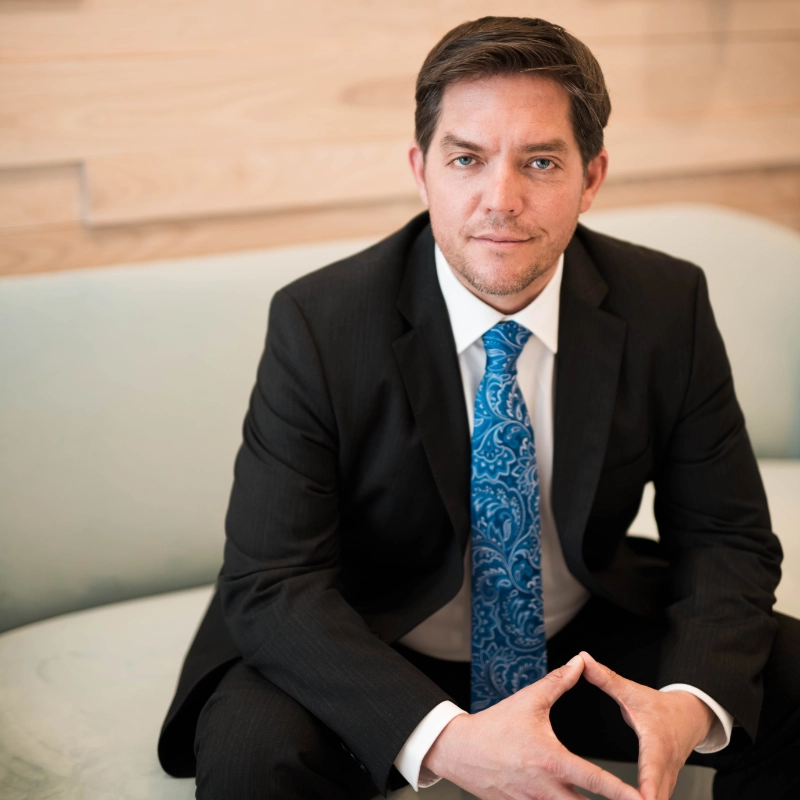


Schedule a Deep Neck Lift Consultation with Dr. Benjamin Stong
A youthful neck is not created by skin tightening alone or limited muscle work and fat removal. The relationship between the platysma, submental tissues, cervicomental angle, jawline, and lower face determines whether a neck appears defined, balanced, and natural.
Dr. Benjamin Stong’s advanced Deep Neck Lift addresses these relationships through complete platysma release and elevation, extended central and lateral myotomies, double platysmaplasties, and vertical cantilever lifting.
For patients requiring simultaneous facial rejuvenation, these techniques are integrated with the KalosLift Advanced Deep Plane Facelift to reposition the cheek, lower face, jawline, and neck as an interconnected anatomical system.
Patients from Atlanta, Buckhead, throughout Georgia, and across the United States seek Dr. Stong for advanced facial and neck rejuvenation focused on natural-looking structural improvement.
Contact Kalos Facial Plastic Surgery to schedule a consultation with Dr. Stong and learn whether a Deep Neck Lift, KalosLift Advanced Deep Plane Facelift, or customized combination of procedures is appropriate for your anatomy and goals.
Medically reviewed by Benjamin C. Stong MD on